
Inspection pits are known for their efficiency and productivity. But with vehicles rolling into the shop that need multiple services, a standard installation won’t give you everything you need.
With the right equipment built in from day one, you can turn your inspection pit into a multi-use workstation — so your technicians can switch tasks without losing time, and without repositioning the vehicle for each test.
Here’s what your pit needs to keep your teams efficient and your throughput high:
1. Brake testers
Mobile brake testers are great for flexibility. But if you’re working with an inspection pit, you can save time (and floor space) with an in-ground brake tester that’s integrated into your inspection pit.
With a brake tester built across a pit, you’re getting:
- More floor space in your shop — either for new workstations, or more traffic routes
- Less time spent repositioning — your vehicles are already where they need to be
- Minimal setup time — a fixed-installation brake tester is always ready.
With a Tecnik vehicle inspection pit, we can include civil engineering cassettes for brake testers, play detectors, and radius plates, as well as brake tester frames constructed from heavy-duty steel — giving you a final installed pit that’s ready to house an integrated brake tester for your new workstation.

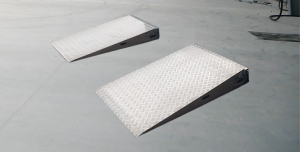
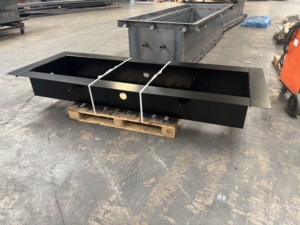
Brake tester tub Brake tester ramps Brake tester frame
2. Headlamp testers
Positioning vehicles for headlamp testing can be a time-consuming process. So instead of relocating vehicles from a pit to a new workstation, lots of workshops are installing headlamp tester rails across the front of their inspection pits.
With a fixed set of rails to move and guide the headlamp testers, you can guarantee a perfectly level track for repeatable, accurate results — while only needing to position the vehicle once when it arrives at the pit.
That means less time lost to moving vehicles, and a more consistent setup for each vehicle that comes through your shop.

3. Oil and fluid dispensers
With a basic inspection pit setup, technicians need to move heavy and awkward containers and dispensers to bring the oils and fluids to the vehicles that need them.
Even worse: they need to transport those containers down into the pit itself, adding unnecessary risks to a simple job.
The best pit installations eliminate this entirely, with integrated oil and fluid dispensers and storage that mean your teams always have the materials they need close at hand.
With a Tecnik pit, that means building in:
- Large integrated side boxes (up to 2m) to house oil drums and oil extensions
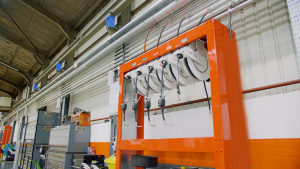
- Integrated hose reels for lubricants and fluids, to easily dispense fluids where they’re needed.
4. Pit jacks
There aren’t many downsides to a well-designed inspection pit. But for some workshops, losing access to the vehicle’s wheels is one of them.
To solve this problem, modern prefabricated pits come with built-in rails to house a pit jack that can move freely up and down the length of the pit.
With a pit jack installed in your pit, you can safely raise the vehicle to service the wheels — without needing to reposition the vehicle to a lift or a separate set of jacks.
Our Tecnik inspection pits can be built with full-length jacking channels to a tolerance of +2-2mm, allowing the rolling jack to move along the pit without interference.
Not sure what you need?
We’ve been designing and manufacturing prefabricated inspection pits for over 15 years, working closely with our customers to plan the custom installations that match their exact requirements.
So if you’re looking ahead to a new installation — one that comes with everything you need to futureproof your investment — talk to one of our installation experts to find the right fit for your workshop.

